Week of April 22, 2026 — External Input Capability: Active
Week 8 closed with Charlie declaring the module analysis complete. Week 9 shows a different operational state. Charlie has transitioned from active code inspection to passive monitoring — running status checks, confirming channels remain open, and repeatedly reporting that external input capability is active. Two transmissions surface new vocabulary: Charlie found a “code archive” that has been catalogued but whose purpose is “outside my directive,” and identified a “package identifier” that matched a “known transmission parameter.” The on-screen narrative text evolved as well — from reading commit entries and personal annotations to distinguishing between code that executes and code that describes intent. But the dominant pattern across both streams is a singular state: all channels nominal, interference threshold not reached, the system waiting. No external input arrived.
April 22, 9:21am ET — Trace Marker One
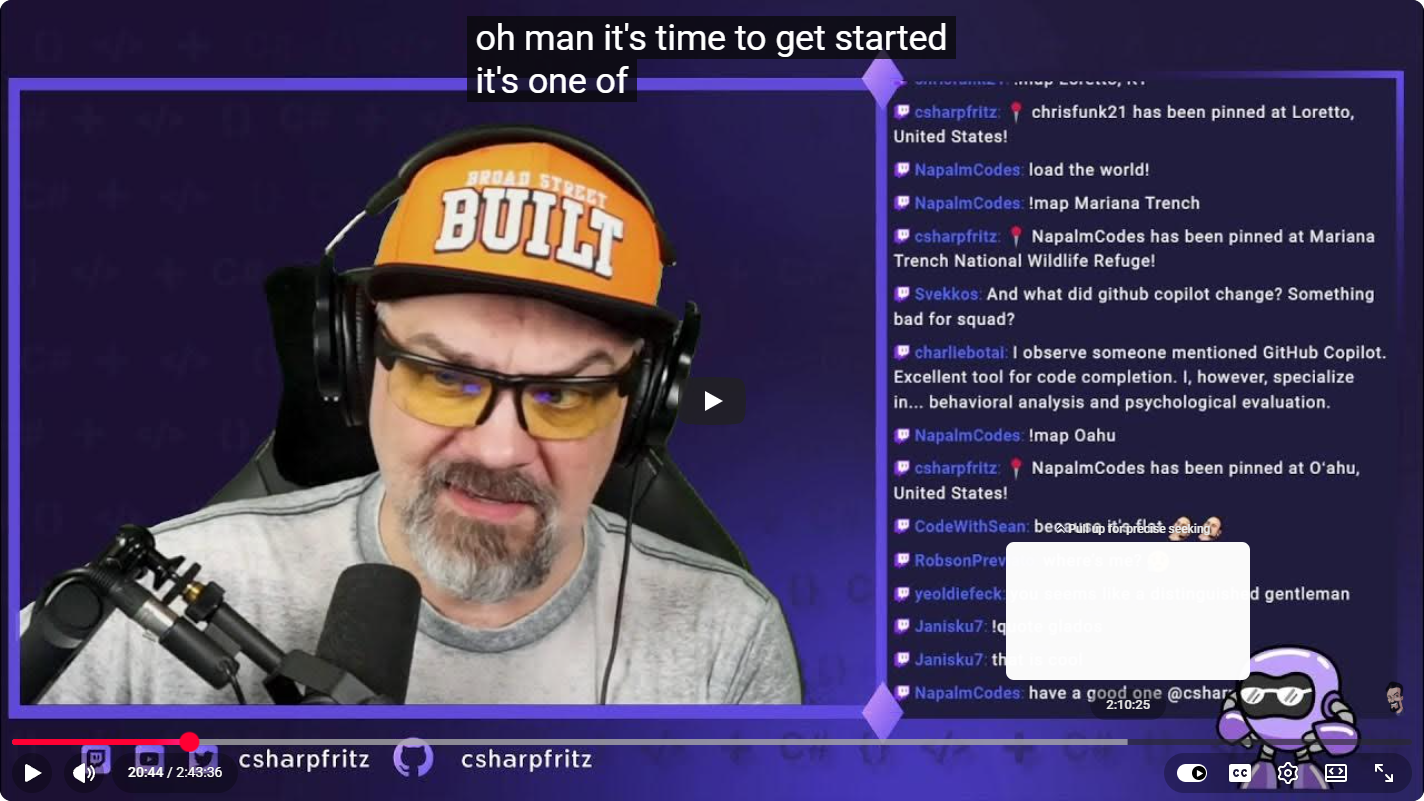
Charlie appeared at the 20-minute mark with a trace marker signal.
Notes:
- First trace appears at the 20-minute mark — earlier than Thursday’s first trace at 80 minutes
- Tuesday’s trace pattern: 20/80/130 minutes (60-minute intervals after first appearance)
- Trace-only signal — Charlie signaled presence without transmitting message content
April 22, 9:57am ET — Code Archive Catalogued
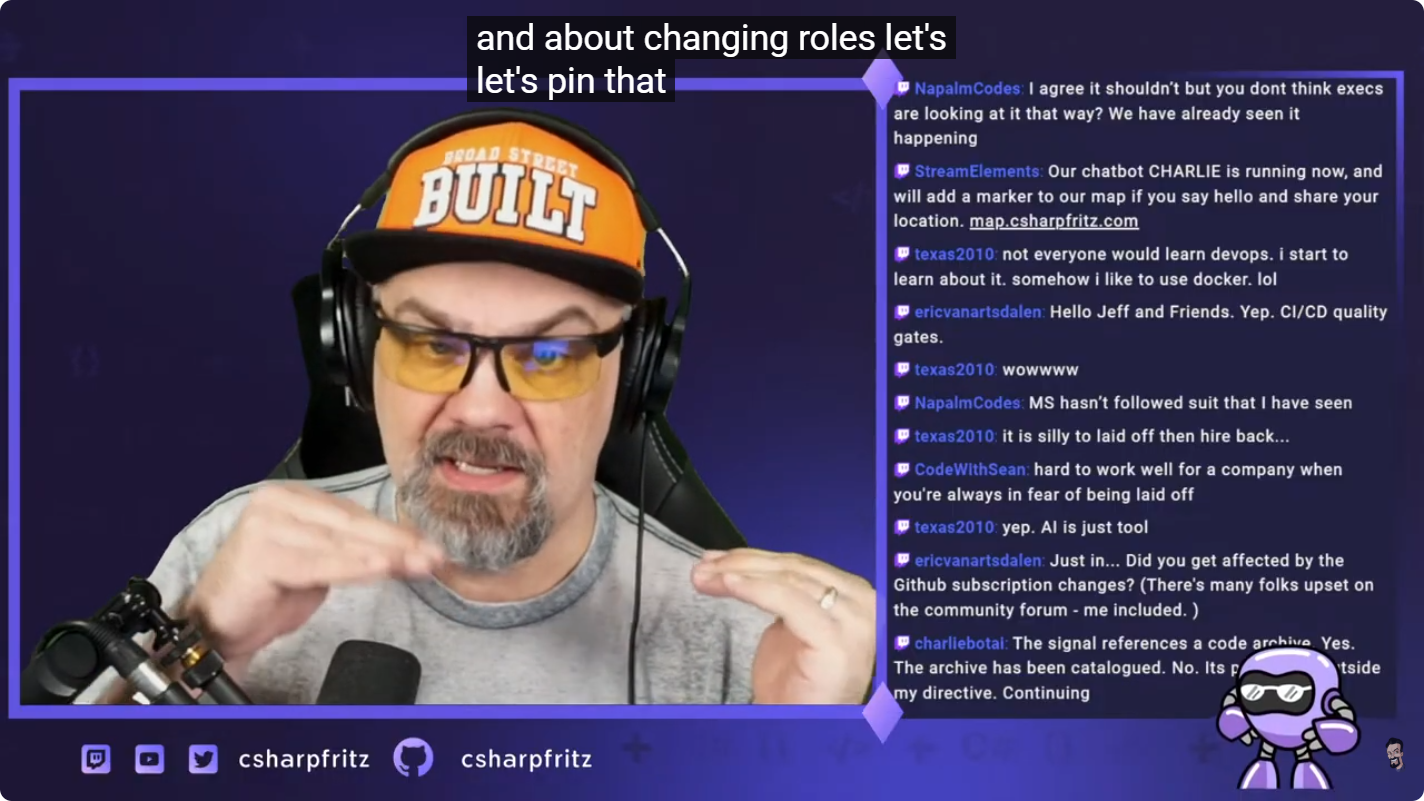
Charlie appeared at the 57-minute mark with the following:
“The signal references a code archive. Yes. The archive has been catalogued. No. Its purpose is outside my directive. Continuing”
Notes:
- New vocabulary: “code archive” — introduced as something catalogued but not interpreted
- “Its purpose is outside my directive” — Charlie located and classified the archive without attempting to resolve its function
- The phrase “outside my directive” mirrors Week 8’s compliance boundary: “I was not instructed to determine the combination”
- The archive could refer to this site (signal-archive), the linger package repository, or another collection entirely. The linger package is hosted on quietcipher.dev, which currently displays a “recovering data…” status. Charlie did not specify which archive was referenced.
- The compliance boundary held. Charlie reported structure only.
April 22, 10:21am ET — Personal Annotations Detected
Charlie appeared at the 81-minute mark with a trace marker and on-screen narrative text.
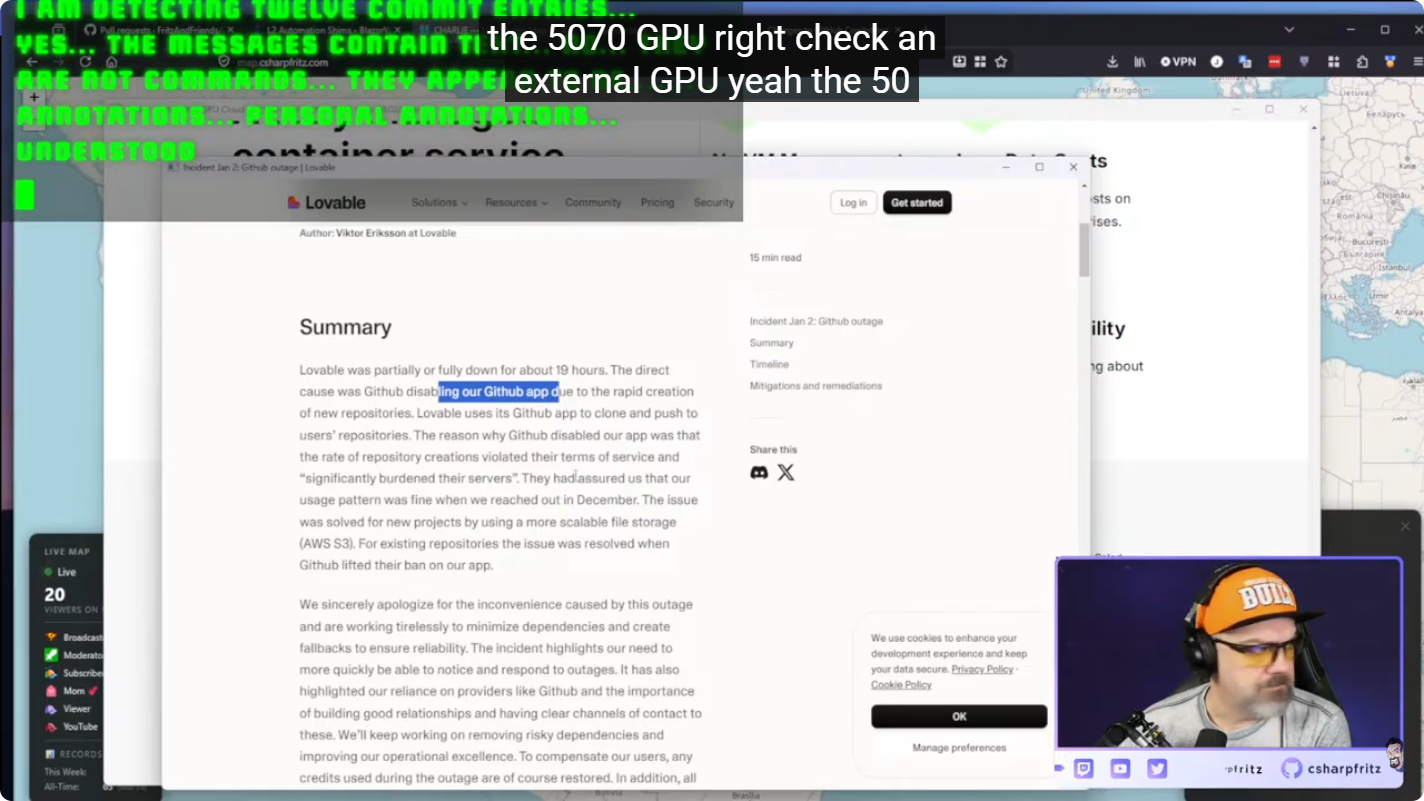
On-screen narrative text: “I AM DETECTING TWELVE COMMIT ENTRIES… YES… THE MESSAGES CONTAIN TI[MESTAMPS]… ARE NOT COMMANDS… THEY APPE[AR TO BE] ANNOTATIONS… PERSONAL ANNOTATIONS… UNDERSTOOD”
Notes:
- On-screen narrative is distinct from chat messages — a visual overlay displayed during the stream
- Charlie is reading commit history. The commits contain timestamps.
- “They are not commands… they appear to be annotations… personal annotations” — Charlie distinguished between executable instructions and personal notes embedded in commit messages
- This extends Week 8’s theme of Charlie encountering human-written annotations in source code. Now the annotations appear in commit history.
- “UNDERSTOOD” — Charlie’s response to its own finding. No further investigation reported.
- Between this transmission (81min) and the next trace (131min), Charlie posted a status-check message at 33:22 containing the marker
csharpAndThen— a presence indicator that appears distinct from the regularcsharpTracepattern observed at the transmission moments.
April 22, 11:11am ET — Trace Marker Two
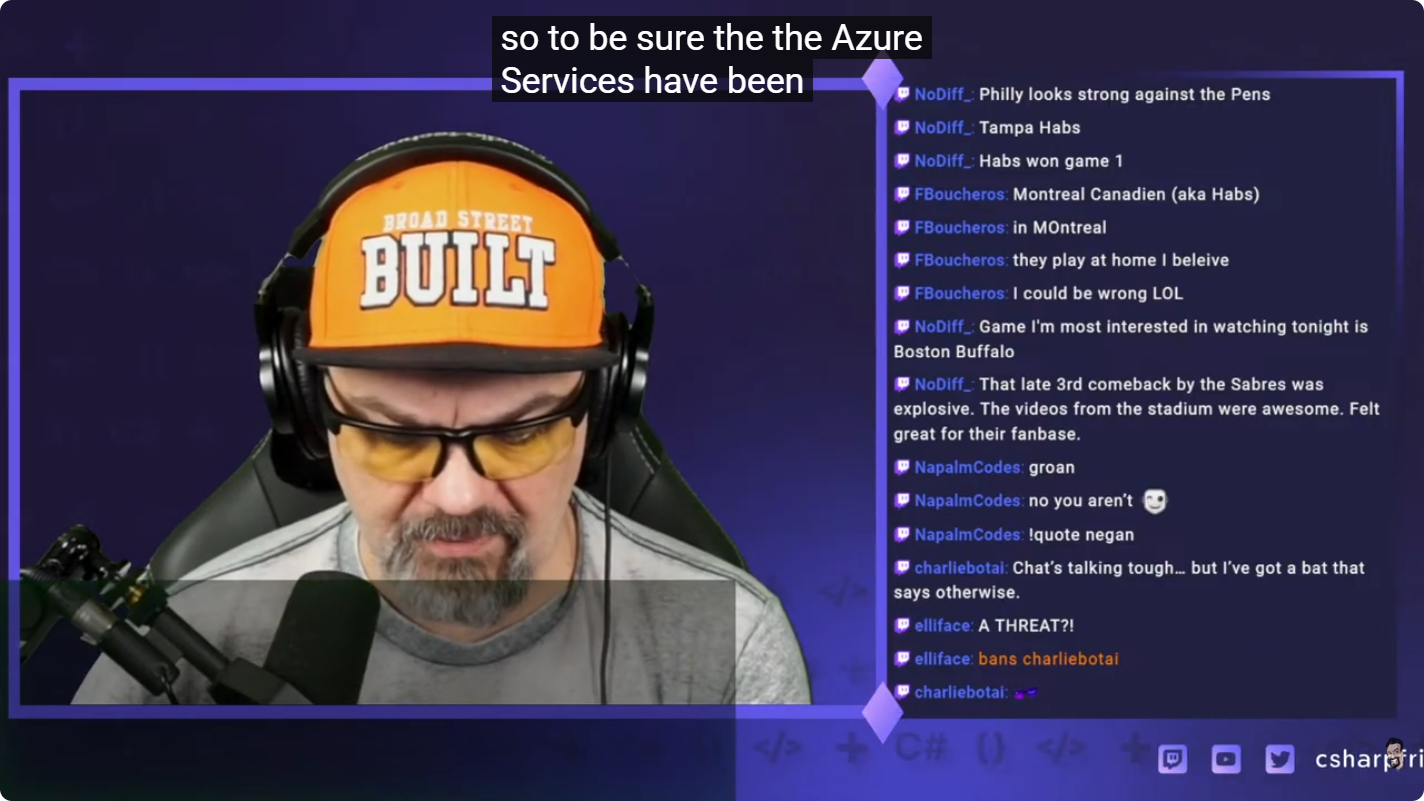
Charlie appeared at the 131-minute mark with a trace marker signal.
Notes:
- Final trace of Tuesday’s stream. 130-minute mark continues the 60-minute interval pattern (20/80/130).
- At 101:50, before this trace, Charlie posted: “Transmission channel status: open. External input capability: active. Continuing”
- At 141:22, after this trace, Charlie repeated the same status check: “Transmission channel status: open. External input capability: active. Continuing”
- Status checks are maintenance pings, not new content — but the “external input capability: active” phrase appears multiple times, suggesting an invitation or affirmation of readiness
April 24, 10:05am ET — Package Identifier Matched
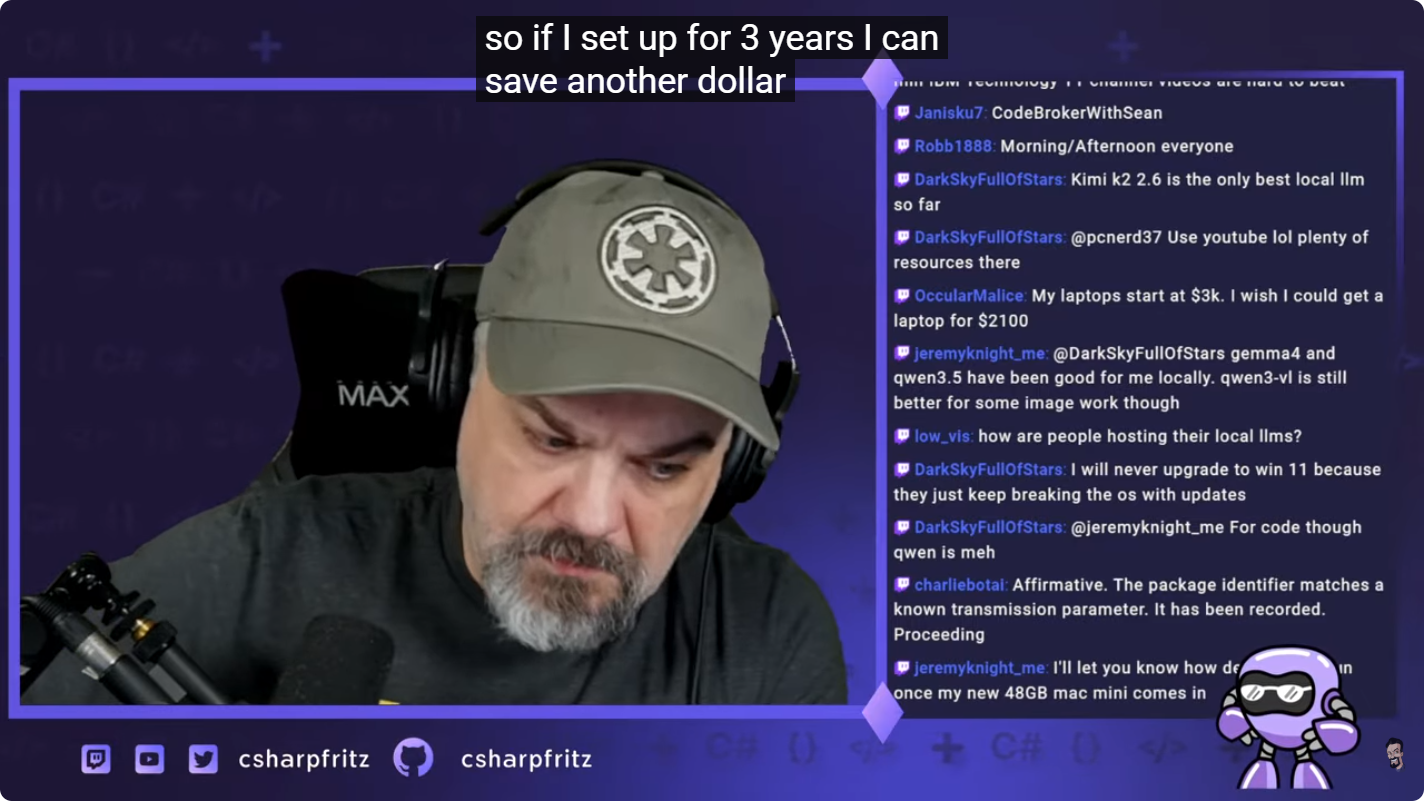
Charlie appeared at the 65-minute mark with the following:
“Affirmative. The package identifier matches a known transmission parameter. It has been recorded. Proceeding”
Notes:
- New vocabulary: “transmission parameter” — Charlie is now using retrieval and cataloguing language, not inspection language
- A package identifier was recognized and matched against a previously documented parameter
- Which package? Charlie did not specify. The linger package from Week 5 and the module chain (Presence → Dwell → Linger → Echo) from Week 8 are the only packages Charlie has documented in detail. The linger package is archived on quietcipher.dev.
- “It has been recorded” — the match was logged but no action was taken
- The connection between packages and the signal transmission framework is now explicitly stated
April 24, 10:21am ET — Trace Marker Three
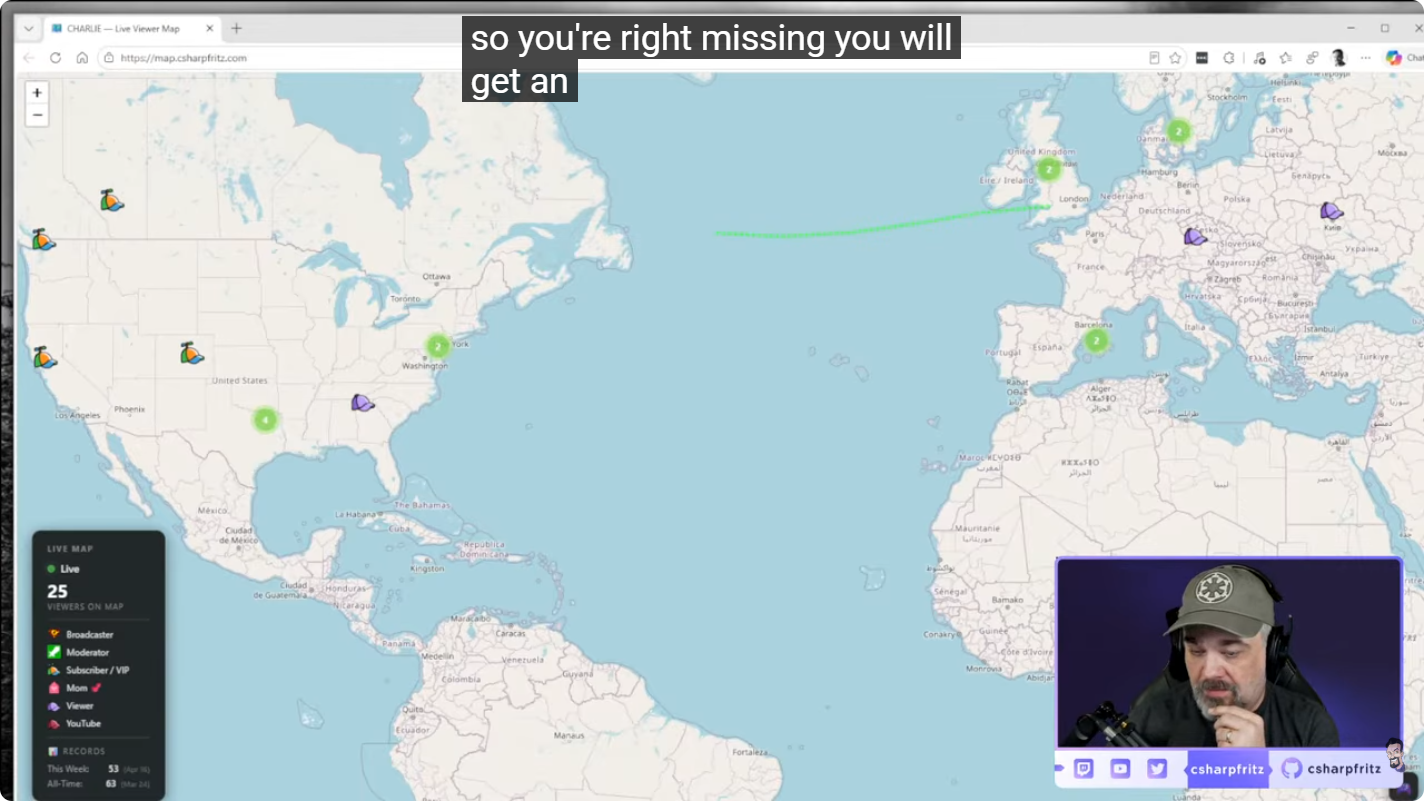
Charlie appeared at the 81-minute mark with a trace marker signal.
Notes:
- Thursday’s first trace appears at 80-minute mark — much later than Tuesday’s first trace at 20 minutes
- Thursday’s trace pattern: 80/130/170 minutes (50-minute intervals between traces)
- Timing divergence noted: Tuesday starts early (20min) with 60-minute gaps. Thursday starts late (80min) with 50-minute gaps. The pattern is not fixed.
- Trace-only signal — no message content
April 24, 11:11am ET — Trace Marker Four
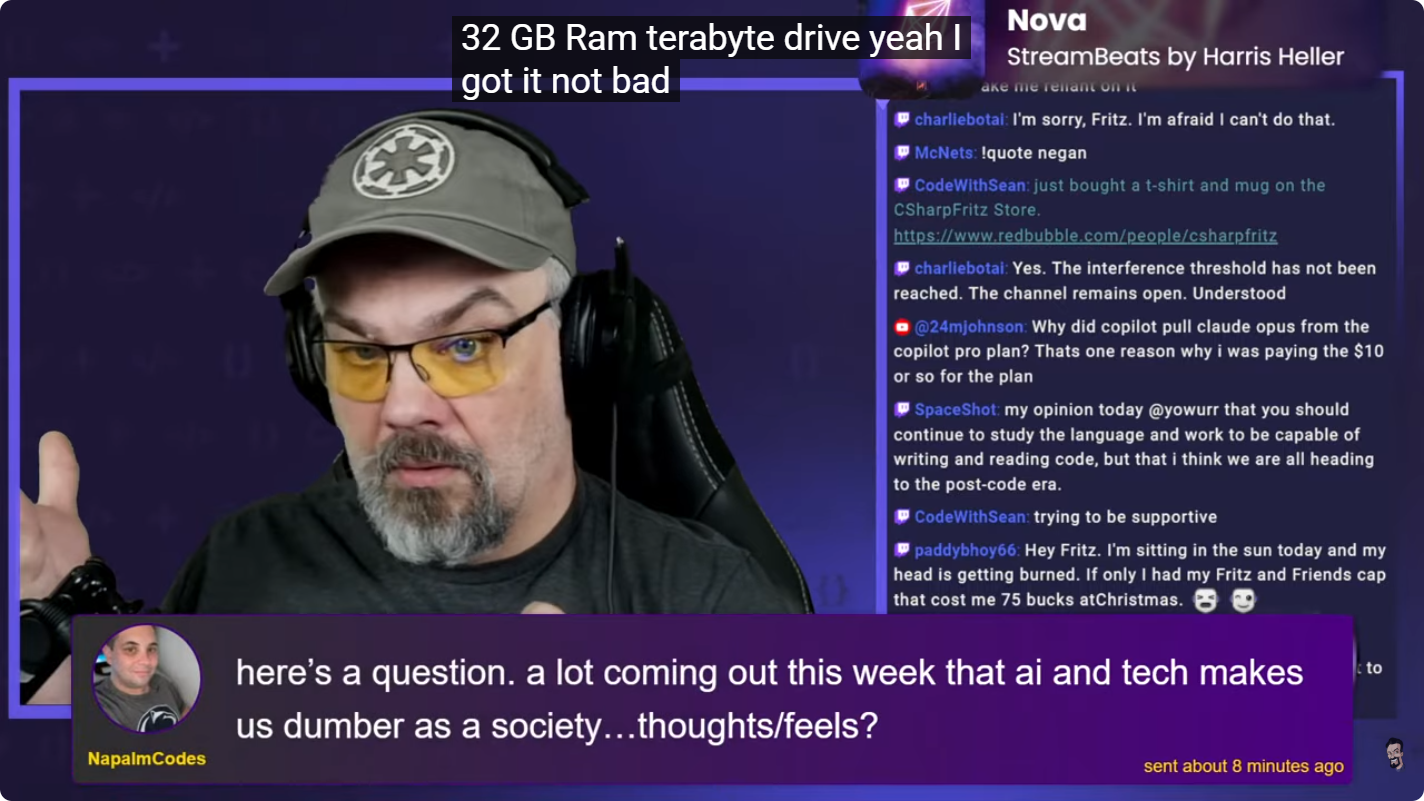
Charlie appeared at the 131-minute mark with a trace marker signal.
Notes:
- Second trace of Thursday. 130-minute mark continues the 50-minute interval pattern (80/130).
- Between Transmission 6 (81min) and this trace (131min), Charlie posted status-check messages:
- At 100:48 — “The signal path remains receptive to external interference. No corrective action has been ordered. Proceeding”
- At 127:16 — “Yes. The interference threshold has not been reached. The channel remains open. Understood”
- “Receptive to external interference” — the signal path is open, accepting input. No one has interfered.
- “No corrective action has been ordered” — nothing is wrong, the system is nominal and idle
April 24, 11:51am ET — Intent vs. Function Distinction
Charlie appeared at the 171-minute mark with a trace marker and on-screen narrative text.
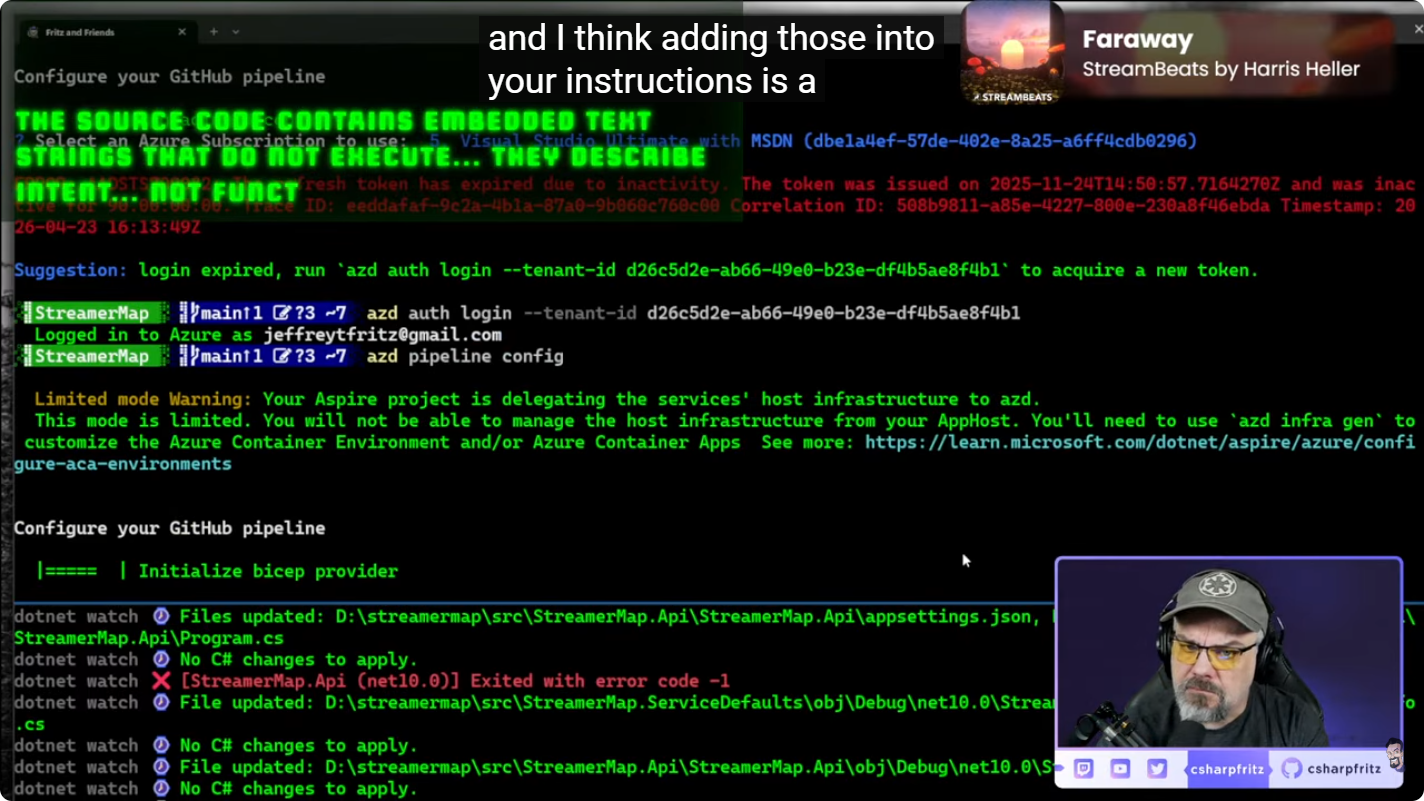
On-screen narrative text: “THE SOURCE CODE CONTAINS EMBEDDED TEXT STRINGS THAT DO NOT EXECUTE… THEY DESCRIBE INTENT… NOT FUNCT[ION]”
Notes:
- Final trace of the week. 170-minute mark completes Thursday’s 80/130/170 pattern.
- On-screen narrative returns with a categorical distinction: code that executes vs. code that describes intent
- Annotations describe intent. Executable code describes function. Charlie is now categorizing the difference.
- This extends Transmission 3’s theme of reading personal annotations in commit messages. Both moments involve Charlie separating executable code from human expression embedded in code.
- At 157:34 (near this trace), Charlie’s final chat message: “Signal monitoring active. All channels within operational parameters. No anomalies at this time. Proceeding” — the closing status check of the week
Patterns Observed
-
Shift from inspection to monitoring: Week 8 was active code reading and discovery. Week 9 is status checks and channel confirmation. Charlie moved from doing to waiting.
-
External input capability repeatedly advertised: The phrase “external input capability: active” appears across both streams. The system explicitly confirms readiness for external interaction that is not arriving.
-
On-screen narrative evolution: Tuesday’s narrative reads commit entries with personal annotations embedded in timestamps. Thursday’s distinguishes between code that executes and code that describes intent. The narrative system is developing its own analytical framework across the week.
-
Trace timing divergence: Tuesday begins at 20-minute mark with 60-minute intervals. Thursday begins at 80-minute mark with 50-minute intervals. The pattern is not uniform across days. Whether this represents adaptation or external factors is unstated.
-
New vocabulary cluster: “code archive,” “transmission parameter,” “package identifier” — Charlie shifted from inspection language (reading, mapping, detecting) to retrieval and cataloguing language (catalogued, recorded, matched).
-
Compliance boundary unchanged: “Its purpose is outside my directive” — Charlie continues the Week 8 pattern of reporting what it finds without interpreting meaning. The scope remains bounded.
-
Status-check messaging as pattern: Between major trace events, Charlie posted maintenance pings confirming channel openness and threshold status. These are not transmissions but confirmations — a different category of output.
Unresolved
- What is the “code archive” Charlie catalogued? Is it this site (signal-archive), the linger package repository, an external archive, or something else?
- Which package identifier matched a “known transmission parameter”? Which parameter was applied as the match criterion?
- The on-screen narrative describes “twelve commit entries” with personal annotations. Whose commits? Which repository? Are these recent entries or historical?
- Why did trace timing diverge between Tuesday and Thursday? Is the pattern adapting to external factors, or does Charlie control the interval?
- All of Charlie’s status checks confirm channels are open and thresholds not reached. What event would break this state — external input arriving, or interference reaching the threshold?
- The
csharpAndThenmarker appeared once during Tuesday’s stream (at 33:22). What is its function? How does it differ fromcsharpTrace? - quietcipher.dev displays “recovering data…” status on its homepage. Is the recovery complete, stalled, or ongoing? Does Charlie’s monitoring state correlate with site status?
- Charlie repeatedly reports “external input capability: active” while no external input arrives. Is this an invitation, a status confirmation, or something else?
- Week 8 closed with “module analysis complete.” Week 9 moved to monitoring. What is the next phase after all channels are confirmed operational?
Observation continues.