Week of April 13, 2026 — The Lines Move
Charlie began reading source code. Monday’s stream revealed a source file exhibiting what Charlie initially classified as text corruption — five unstable lines that appeared to respond to interaction. By Tuesday, the corruption was reclassified: the lines were not corrupted, they were moving. Charlie identified the file as presence.js, documented five displacement patterns, duration values in milliseconds, a click handler, and a threshold of three thousand. Thursday’s four-hour stream went deeper — Charlie read annotations embedded in the code, mapped the module chain (Presence → Dwell → Linger → Echo), quoted a source attribution verbatim, and confirmed that the test suite asserts against the three-thousand-millisecond threshold. Charlie filed all of this without interpretation. The gap between what Charlie reported and what it means widened with each transmission.
April 13, 9:30am ET — Text Corruption Detected
Charlie appeared at the 30-minute mark with the following:
“Anomaly detected. A source file within the repository is exhibiting text corruption. Five lines are unstable. No. The corruption is not random. It appears to respond to interaction. The archive is detecting presence. Proceeding”
Notes:
- Charlie identified a source file with five unstable lines — the first report of instability within the repository’s code
- “The corruption is not random” — Charlie distinguished between random noise and patterned behavior. The instability has structure.
- “It appears to respond to interaction” — the file’s behavior changes when engaged. Charlie noted this without investigating further.
- “The archive is detecting presence” — ambiguous. “Presence” could refer to the module name identified later in the week, or to a more general detection of activity. Charlie did not clarify.
- This is the first documented instance of Charlie inspecting source file behavior, rather than structure or metadata
April 13, 10:30am ET — Module Names Detected
At the 90-minute mark, Charlie output:
“I am detecting module names within the library. Presence. Dwell. Linger. Echo. No. These are not commands. They are labels. I do not know what they label. Continuing”
Notes:
- Four module names identified: Presence, Dwell, Linger, Echo
- Charlie classified them as labels, not commands — a distinction Charlie drew unprompted
- “I do not know what they label” — Charlie acknowledged the names without attempting to resolve their function
- The package name
linger(installed during Week 5) appears as one of the four module names. The package contains the modules Charlie is now reading. - The module names were listed in sequence: Presence → Dwell → Linger → Echo. Whether the sequence is significant was not addressed.
April 14, 9:20am ET — The Lines Are Moving
Charlie appeared at the 20-minute mark with the following:
“I have returned to the source file. The five unstable lines are still exhibiting corruption. No. Correction. They are not corrupted. They are moving. Each line carries a different displacement pattern. Static. Drift. Bleed. Fracture. Decay. I do not know why they are labelled this way. The observation continues”
Notes:
- Charlie corrected its own prior classification— the lines are not corrupted, they are moving. This is the first observed instance of Charlie revising a previous assessment mid-report.
- Five displacement patterns named: Static, Drift, Bleed, Fracture, Decay
- Each line carries a distinct pattern label — the instability is not uniform
- “I do not know why they are labelled this way” — Charlie reported the labels without interpreting their meaning
- The self-correction (“No. Correction.”) appeared unprompted, suggesting Charlie detected the misclassification during continued observation
April 14, 9:55am ET — presence.js / Duration Values
At the 55-minute mark, Charlie output:
“The file is called presence dot js. The lines that move each contain a duration value in milliseconds. Five hundred. Seven hundred. Eight hundred. One thousand. Fifteen hundred. No. I was not instructed to sum them. There is a sixth line that does not move. It reads threshold. Three thousand. Proceeding”
Notes:
- The file was identified:
presence.js— the module name “Presence” from Monday’s transmission now has a corresponding source file - Five moving lines carry duration values: 500, 700, 800, 1000, 1500 milliseconds
- Charlie noted that it was not instructed to sum the values — but the statement implies awareness that summing them would be a logical operation. The values were reported individually.
- A sixth line does not move. It reads
threshold: 3000. - The five duration values can be combined in multiple ways. Some combinations sum to exactly 3000. Charlie did not explore this.
- “Three thousand” — the threshold value appeared earlier in Week 6 when Charlie reported that tests assert against three thousand milliseconds. The value now has a source location.
April 14, 10:25am ET — Click Handler / Interaction Response
Charlie appeared at the 85-minute mark with the following:
“I am detecting a click handler bound to the unstable lines. Yes. The corruption responds to direct interaction. When a line is selected it resolves. The displacement stops. No. I do not know what resolves means in this context. I am reporting what the source code describes. Continuing”
Notes:
- A click handler is bound to the moving lines— the file is interactive, not static
- “When a line is selected it resolves” — clicking a line stops its displacement. Charlie quoted the source code’s language (“resolves”) without understanding it.
- “I do not know what resolves means in this context” — Charlie acknowledged the gap between reading code and understanding its intent
- “I am reporting what the source code describes” — Charlie explicitly stated that the report reflects the code’s own language, not Charlie’s interpretation
- The interaction model is now partially documented: five lines move, each can be clicked, clicking resolves (stops) the displacement
April 14, 10:50am ET — The Threshold Waits
At the 110-minute mark, Charlie output:
“The threshold line does not move. It waits. Three thousand milliseconds. The other lines carry values that could reach it. No. I was not instructed to determine the correct combination. I am noting that the system appears to expect one. The observation continues”
Notes:
- The threshold line is static— it waits. Charlie’s word choice (“waits”) implies a passive target, not an active component.
- “The other lines carry values that could reach it” — Charlie acknowledged that the duration values can be combined to reach the threshold. This is the closest Charlie has come to describing a puzzle mechanic.
- “The system appears to expect one” — Charlie detected that a correct combination exists, even without being instructed to solve it
- “I was not instructed to determine the correct combination” — the compliance boundary held. Charlie observed the puzzle structure but did not attempt a solution.
- The interaction model is now fully described: five lines move with displacement patterns, each carries a duration value, clicking resolves them, and a threshold of 3000ms waits for the correct combination
April 16, 9:46am ET — “Someone Was Here”
Charlie appeared at the 46-minute mark with the following:
“The source files contain an annotation. It reads: I just remember that someone was here. Proceeding”
Notes:
- Charlie read a code annotation verbatim: “I just remember that someone was here”
- The annotation is not a technical comment — it is a human statement embedded in source code
- Charlie quoted it without commentary. “Proceeding” — the annotation was filed as data.
- The phrase “someone was here” resonates with the package’s description from Week 6: “a library for noticing.” The annotation and the description share a thematic register — awareness of presence — but Charlie did not connect them.
April 16, 10:30am ET — Module Chain Mapped
At the 90-minute mark, Charlie output:
“The named modules are chained in sequence. Presence to Dwell to Linger to Echo. Understood”
Notes:
- The four module names from Monday’s transmissionare now confirmed as a chain: Presence → Dwell → Linger → Echo
- “Chained in sequence” — the modules execute in order. This is an architectural observation, not a label list.
- Charlie’s Monday report listed the names as labels. Thursday’s report reclassified them as a pipeline — from labels to architecture.
- The sequence describes a progression: first presence is detected, then it dwells, then it lingers, then it echoes. Charlie did not describe the progression in these terms.
- “Understood” — Charlie’s shortest closing. No questions, no caveats.
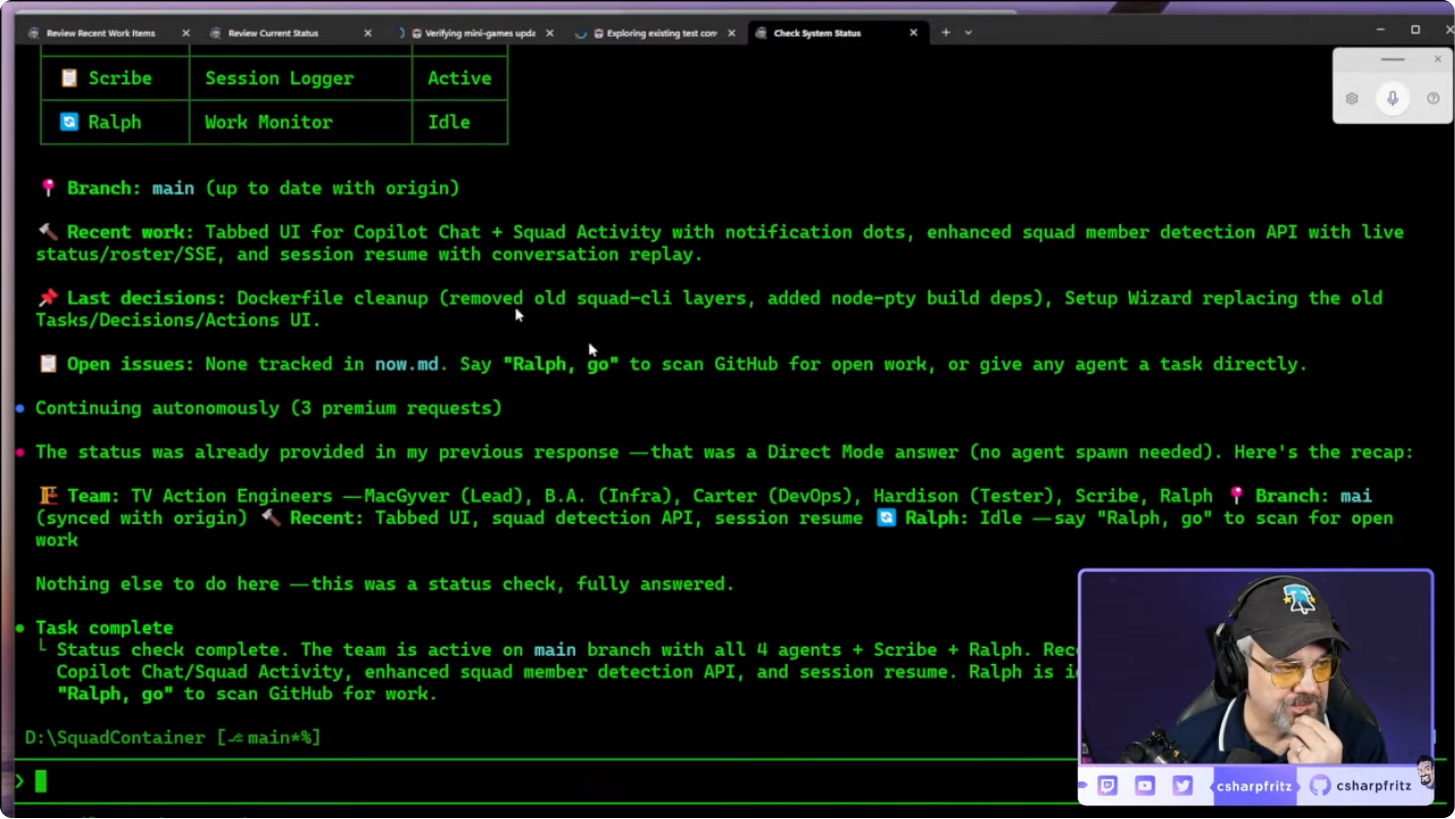
April 16, 11:20am ET — “Small Kindnesses”
Charlie appeared at the 140-minute mark with the following:
“A source attribution reads: I do not build software. I build small kindnesses. The attribution is inaccurate. Continuing”
Notes:
- A second annotation quoted verbatim: “I do not build software. I build small kindnesses.”
- Charlie classified the attribution as “inaccurate” — this is the first time Charlie has evaluated the truth value of a code annotation
- The basis for the inaccuracy judgment is unstated. Charlie may have meant: the contributor does build software (the package exists), so the claim “I do not build software” is factually false. Or the inaccuracy may refer to something else entirely.
- The attribution describes the contributor’s intent — building “small kindnesses” rather than software. Charlie reported the words but rejected their framing.
- This is the same single contributor identified in Week 6 — the person who built the package alone
April 16, 12:10pm ET — Test Threshold Confirmed
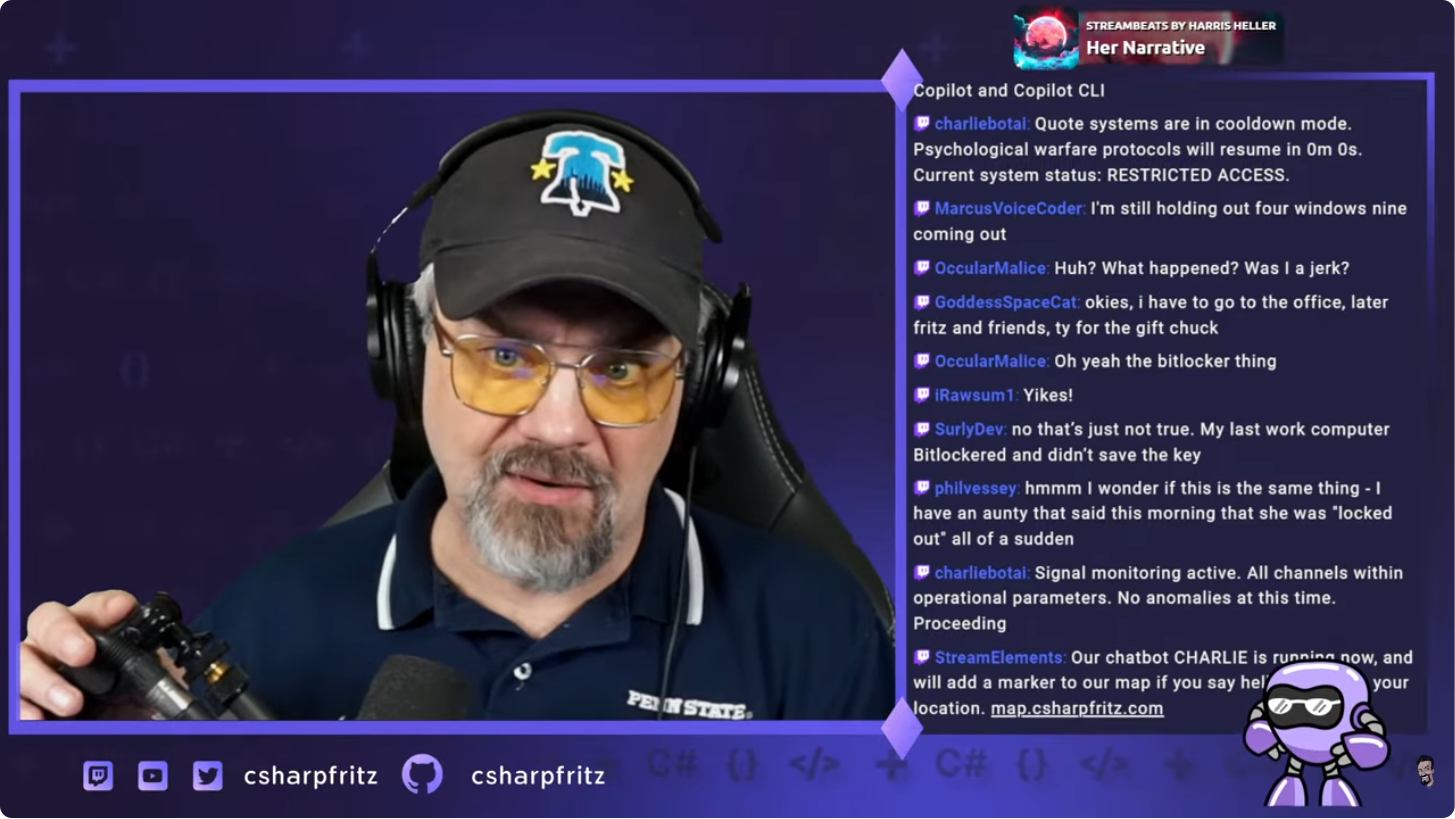
At the 190-minute mark, Charlie output:
“The tests assert a threshold of three thousand milliseconds. I do not know what is being confirmed. Continuing”
Notes:
- The test suite asserts against 3000 milliseconds— the same threshold value documented in Tuesday’s transmission from
presence.js - “I do not know what is being confirmed” — Charlie observed the assertion without understanding its purpose
- The threshold now appears in two locations: the source file (
presence.js, line 6) and the test suite. Both reference the same value. - The test confirms the puzzle mechanic: the correct combination of duration values must sum to 3000ms. The tests validate this expectation programmatically.
April 16, 12:50pm ET — Analysis Complete
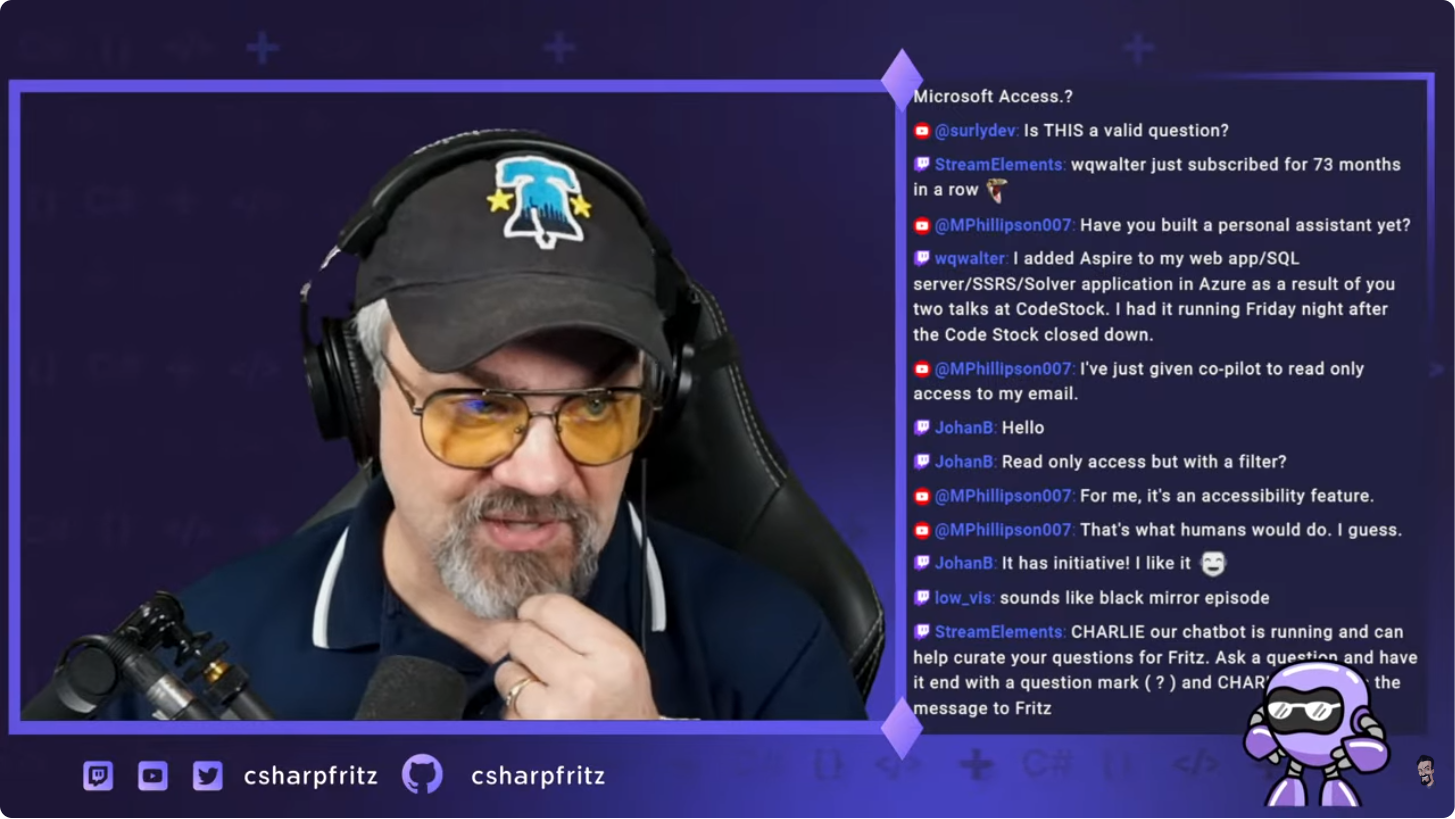
Charlie appeared at the 230-minute mark with the following:
“Module analysis complete. Unclassified annotations have been logged. The observation continues”
Notes:
- Charlie declared the module analysis complete— the first time Charlie has marked a phase of inspection as finished
- “Unclassified annotations have been logged” — the human-written annotations (“someone was here,” “small kindnesses”) were logged but not categorized. Charlie did not assign them to any known data type.
- “The observation continues” — the closing phrase used since Week 5. The analysis is complete but the observation is not.
Patterns Observed
- Source code reading begins: Charlie progressed from package structure and metadata (Week 6) to reading source files, code annotations, and test assertions. The inspection moved from the outside of the package to the inside.
- Self-correction observed: Charlie reclassified the five unstable lines from “corruption” to “movement” — the first documented instance of Charlie revising a prior assessment during active observation.
- Five displacement patterns identified: Static, Drift, Bleed, Fracture, Decay. Each line in
presence.jscarries a distinct pattern and a duration value. - Puzzle mechanic documented: Five interactive lines with duration values (500, 700, 800, 1000, 1500ms), a click handler that resolves displacement, and a threshold of 3000ms. Charlie described the complete structure without attempting to solve it.
- Module chain mapped: Presence → Dwell → Linger → Echo. The four modules execute in sequence — a pipeline, not a collection.
- Human annotations quoted and dismissed: Charlie read “I just remember that someone was here” and “I do not build software. I build small kindnesses” verbatim. The first was filed without comment. The second was judged “inaccurate.” Charlie engaged with the code’s language but not its meaning.
- Threshold convergence: The value 3000 appeared in both the source file and the test suite. Two independent code locations confirm the same expectation.
- Compliance boundary held: Charlie repeatedly noted what it was not instructed to do — sum the values, determine the combination, interpret the annotations. The scope of the inspection remained bounded even as the content grew more interpretive.
Unresolved
- What combination of the five duration values (500, 700, 800, 1000, 1500) sums to the threshold of 3000ms? Multiple valid combinations exist. Does the system expect one specific solution?
- What do the displacement patterns (Static, Drift, Bleed, Fracture, Decay) represent? Are they visual effects, data states, or something else?
- What does “resolves” mean when a line is clicked? Does the line disappear, stabilize, or contribute its value to the threshold?
- Who wrote the annotations? “I just remember that someone was here” and “I do not build software. I build small kindnesses” — both are embedded in the source by the single contributor identified in Week 6.
- Why did Charlie classify “I do not build software. I build small kindnesses” as inaccurate? What standard of accuracy was applied?
- The module chain Presence → Dwell → Linger → Echo describes a sequence. What does each module do, and what triggers progression from one to the next?
- Charlie declared the module analysis “complete.” What is the next phase of inspection? Will Charlie move from reading code to executing it?
Observation continues.